Prehistoric Egypt
Longest phase of human development in the Nile Valley.

via Wikipedia: Prehistoric Egypt · see source
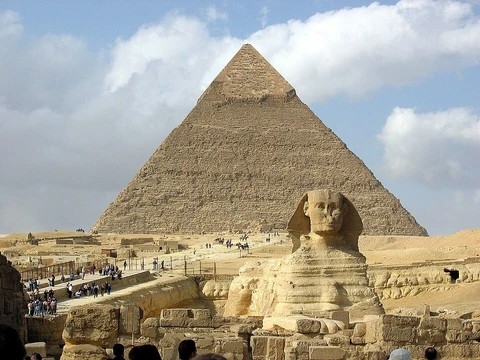
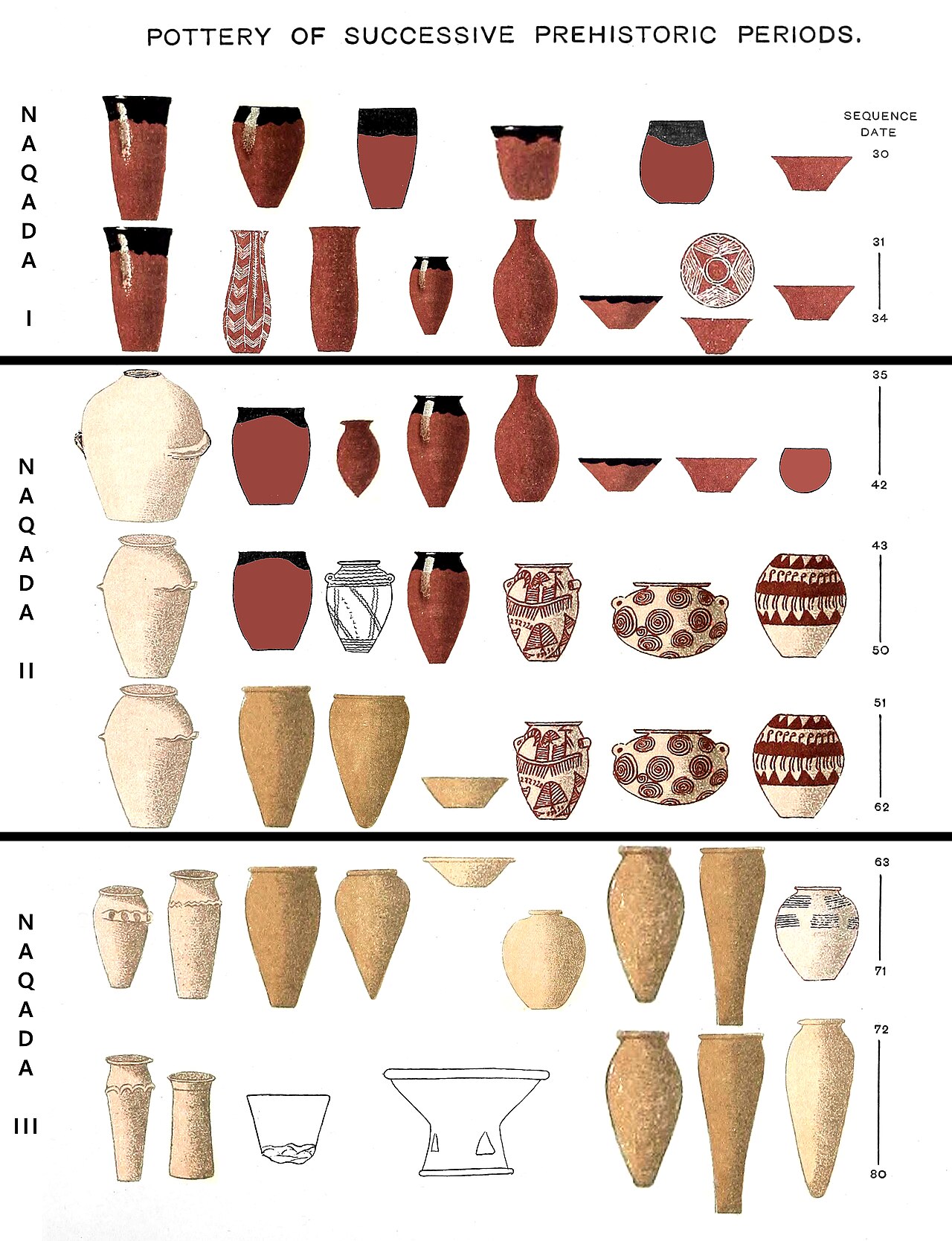
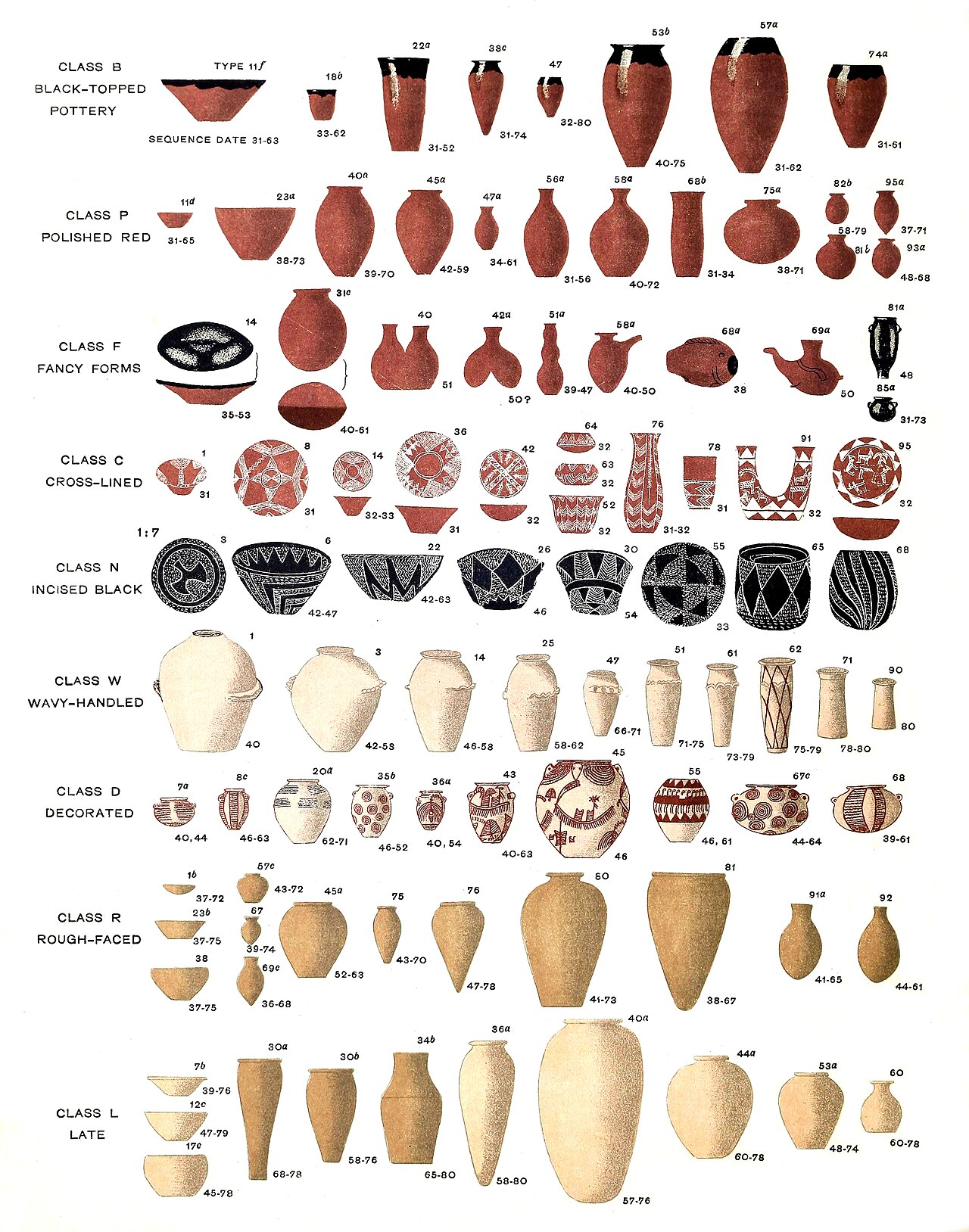
Prehistoric Egypt and Predynastic Egypt was the period of time starting at the first human occupation of the region and ending at the First Dynasty of Egypt around 3100 BC. At the end of prehistory, "Predynastic Egypt" is traditionally defined as the period from the final part of the Neolithic period beginning c. 5000–4000 BC to the end of the Naqada III period c. 3100 BC. The dates of the Predynastic period were first defined before widespread archaeological excavation of Egypt took place, and recent finds indicating a gradual Predynastic development have led to controversy over when exactly the Predynastic period ended. Thus, various terms such as "Protodynastic period", "Zero Dynasty" or "Dynasty 0" are used to name the part of the period which might be characterized as Predynastic by some and Early Dynastic by others.
- Earliest known structures
- c. 98,000 BC (Arkin 8 site, Wadi Halfa, Sudan)
Lore & Background
The Late Paleolithic period (c. 20000 to 10000 BC) saw the Halfan and Kubbaniyan cultures flourish along the Upper Nile Valley. For the Halfan, Schild and Wendorf (2014) concluded the culture existed c. 22.5-22.0 ka cal BP. People survived on a diet of large herd animals and the Khormusan tradition of fishing, and greater concentrations of artifacts indicate they settled for longer periods. The Qadan culture (13,000–9,000 BC) originated in Upper Egypt approximately 15,000 years ago and persisted for about 4,000 years. Qadan peoples were the first to develop sickles and also developed grinding stones independently to aid in collecting and processing wild grasses and grains, though grains were not planted in ordered rows. The Sebilian culture began around 13,000 BC and vanished around 10,000 BC; analyses of pollen indicate the people were gathering grains, though domesticated seeds were not found. The Predynastic period is generally divided into cultural eras, each named after the place where a certain type of Egyptian settlement was first discovered. However, the same gradual development that characterizes the Protodynastic period is present throughout the entire Predynastic period, and individual "cultures" must not be interpreted as separate entities but as largely subjective divisions used to facilitate study of the entire period.
Reader's Guide
Prehistoric Egypt represents the entire human story in the Nile Valley before the unification of the state. It is theorized that Egypt has been inhabited by humans (including archaic humans) for over a million (and probably over 2 million) years, though the evidence for early occupation is sparse and fragmentary. The oldest archaeological finds in Egypt, stone tools belonging to the Oldowan industry, are poorly dated. Some of the oldest known structures were discovered at the Arkin 8 site near Wadi Halfa, Sudan, dated to 100,000 BC—oval depressions about 30 cm deep and 2 × 1 meters across, lined with flat sandstone slabs that served as tent rings for mobile dome-like shelters. The vast majority of Predynastic archaeological finds have been in Upper Egypt, because the silt of the Nile River was more heavily deposited at the Delta region, completely burying most Delta sites long before modern times. Early evidence for Neolithic cultures in the Nile Valley are generally located in the north of Egypt, exhibiting well-developed stages of Neolithic subsistence, including the cultivation of crops and sedentism, as well as pottery production from the late 6th Millennium BC onwards. Egypt was one of the first areas to adopt the Neolithic package emerging from West Asia as early as the 6th millennium BCE; goats and sheep, not indigenous to Africa, were introduced from the Neolithic Levant around 6000 BCE, probably through the Sinai Peninsula, followed by a rapid spread.
Did You Know?
- Some of the oldest known structures in Egypt are oval depressions about 30 cm deep and 2 × 1 meters across, discovered at the Arkin 8 site near Wadi Halfa, Sudan, dated to around 98,000 BC. However, these depressions are
- The Nazlet Khater skeleton, found in 1980 and dated to 33,000 years in 1982, is a well-known early modern human fossil from Africa, but it is not the only complete skeleton from the earliest Late Stone Age; other complet
Defining the Threshold of Civilization
A civilization, in the broadest scholarly sense, is not merely a group of people living together but a complex society that has crossed several developmental thresholds simultaneously. It must exhibit the formation of a state, visible social stratification, urbanization, and—critically—symbolic communication systems that go beyond spoken or signed language, such as writing and graphic arts. When scholars identify a cradle of civilization, they are pointing to a specific place and culture from which one of these complex societies first emerged. Ancient Egypt, situated along the Nile Valley in Northeast Africa, occupies one of six such cradles that modern scholarship generally recognizes. The others include Mesopotamia, the Indo-Gangetic Plain, the North China Plain, the Andean Coast, and the Mesoamerican Gulf Coast. What unites all of these locations is not a shared origin story but a parallel achievement: each independently generated the institutional and material complexity that distinguishes a civilization from earlier, simpler forms of human organization.
Agriculture as the Engine of Complexity
Every recognized cradle of civilization, with the possible exception of the Caral–Supe culture on Peru's coast, rested its entire material life on agriculture. Farmers generated a surplus beyond what they themselves needed, and that surplus became the economic foundation upon which centralized governments, political and religious leadership, and large-scale public works were built. The scholar Gordon Childe framed this transformation as two successive revolutions: first the Neolithic Revolution in Western Asia, which produced settled farming communities, and second the urban revolution, which intensified dense settlement, occupational specialization, social class, exploitation of surplus, monumental architecture, and the emergence of writing. In Egypt's case, the Nile Valley provided the conditions for this agricultural base, and by the 31st century BC the city of Memphis had grown to house tens of thousands of people, placing it among the earliest large urban centers in the world alongside Mesopotamian cities like Uruk, Ur, Kish, and Eridu.
From Nomadic Roots to Urban Centers
The path from scattered foraging groups to dense urban settlements was neither instantaneous nor uniform. In the Levant, as early as 12,000 BC, the Natufian culture had already become sedentary, and by 10,000 BC it had transitioned into an agricultural society. Favourable conditions for hunting, fishing, and gathering cereals created a wide-spectrum economy that encouraged the establishment of permanent villages. The Neolithic, beginning in Western Asia around 10,000 BC, saw the first proto-urban settlements with populations in the several thousands. It would take another several millennia before cities of tens of thousands appeared. In Egypt, Memphis reached that scale by the 31st century BC. What is notable is that the sequence Childe described—agriculture, then settlement, then urbanization, then writing—does not hold universally. In some regions, monumental architecture preceded any evidence of village life, and in others, such as the Inca realm, complex record-keeping existed without a conventional writing system. Egypt's trajectory, while sharing the agricultural foundation, followed its own particular rhythm toward urbanization.
The Shift from a Single Origin to Multiple Cradles
For much of the nineteenth and early twentieth centuries, the prevailing scholarly narrative held that civilization originated in the Fertile Crescent and radiated outward through cultural influence to every other region. That model has been thoroughly revised. Contemporary research demonstrates that complex societies arose independently at multiple sites across both hemispheres, each following its own sociocultural timeline. Today, six distinct areas are generally identified as independent cradles: the Fertile Crescent encompassing Mesopotamia and the Levant, the Nile Valley in Northeast Africa, the Indo-Gangetic Plain, the North China Plain, the Andean Coast, and the Mesoamerican Gulf Coast. Egypt's inclusion in this list reflects the recognition that the Nile Valley generated its own state structures, social hierarchies, and symbolic communication systems without requiring external transmission. Furthermore, the old sharp divide between sedentary and nomadic populations has been shown to be an oversimplification; these groups continued to interact across cultural boundaries throughout the prehistoric period, complicating any simple diffusion model.
Gallery

Frequently Asked Questions
What is Prehistoric Egypt?
Prehistoric Egypt covers the full span of human presence in the Nile Valley, from the earliest known structures dating to roughly 98,000 BC at the Arkin 8 site in Wadi Halfa, Sudan, up to the founding of the First Dynasty around 3100 BC. It represents the longest continuous phase of human development in that region before the dynastic era began.
What defines Predynastic Egypt specifically?
Predynastic Egypt is the narrower, later portion of prehistory, traditionally spanning from the tail end of the Neolithic period (around 5000–4000 BC) through the close of the Naqada III phase near 3100 BC. It marks the transition from scattered Neolithic communities toward the organized societies that would soon form the first dynastic kingdoms.
How does the Prehistoric Egypt era end?
The period concludes with the rise of the First Dynasty of Egypt around 3100 BC, when previously independent Nile Valley communities unified under centralized rule. This shift from the Naqada III phase into dynastic governance formally closes out the prehistoric era.
Why is Prehistoric Egypt important in the Ancient Civilizations series?
It covers the longest stretch of human development in the Nile Valley, providing the foundational context for everything that followed in Egyptian history. Understanding this era is essential because it shows how centuries of gradual cultural shifts laid the groundwork for the pharaonic civilization most fans know best.
Are the dates for Prehistoric Egypt settled?
Not entirely—the original timeframe was established before large-scale archaeological excavation across Egypt, and more recent finds pointing to a slower, more gradual development have sparked ongoing debate about exact boundaries. The precise starting and ending points of the Predynastic period therefore remain a topic of active scholarly discussion.
More in Ancient Civilizations 1-15
Related in Ancient Civilizations
Links follow this subject's own source article.
Spotted an error? Know more?
This is a living reference — every entry is fact-audited, and reader corrections feed straight into our audit queue. Suggest an edit · See this site's audit record