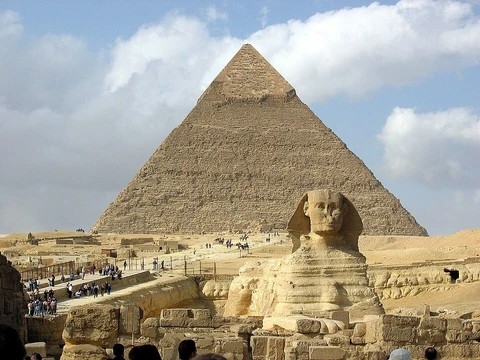
Stone Age
The Bronze Age civilizations of Greece around the Aegean Sea.

via Wikipedia: Aegean civilization · see source
The Aegean civilization is a general term for the Bronze Age civilizations of Greece around the Aegean Sea. There are three distinct but communicating and interacting geographic regions covered by this term: Crete, the Cyclades and the Greek mainland. Crete is associated with the Minoan civilization from the Early Bronze Age. The Cycladic civilization converges with the mainland during the Early Helladic ("Minyan") period and with Crete in the Middle Minoan period. From c. 1450 BC (Late Helladic, Late Minoan), the Greek Mycenaean civilization spreads to Crete, probably by military conquest. The earlier Aegean farming populations of Neolithic Greece brought agriculture westward into Europe before 5000 BC.
- Duration
- Roughly 3.4 million years
- First Period In
- Three-age system (Stone, Bronze, Iron)
- Subdivisions
- Paleolithic, Mesolithic, Neolithic
- Key Innovation
- Stone tools with edge, point, or percussion surface
- Transition Marker
- Melting and smelting of copper
Lore & Background
Around 5,000 BC, peoples descending from neolithic migrant populations reached the northern European plain in modern-day France and Germany; they reached Britain some 1000 years later. Once in the Balkans, the Aegean EEFs appear to have divided into two wings: one which expanded further north into Europe along the Danube (Linear Pottery culture), and another which headed west along the Mediterranean (Cardial Ware) into the Iberian Peninsula. Descendants of this latter group eventually migrated into Britain. Previously, these areas were populated by Western Hunter-Gatherer represented by the Cheddar Man. The Chalcolithic (Copper Age) began in Europe around 5500 BC. Chalcolithic Europeans began to erect megaliths in this period.
Reader's Guide
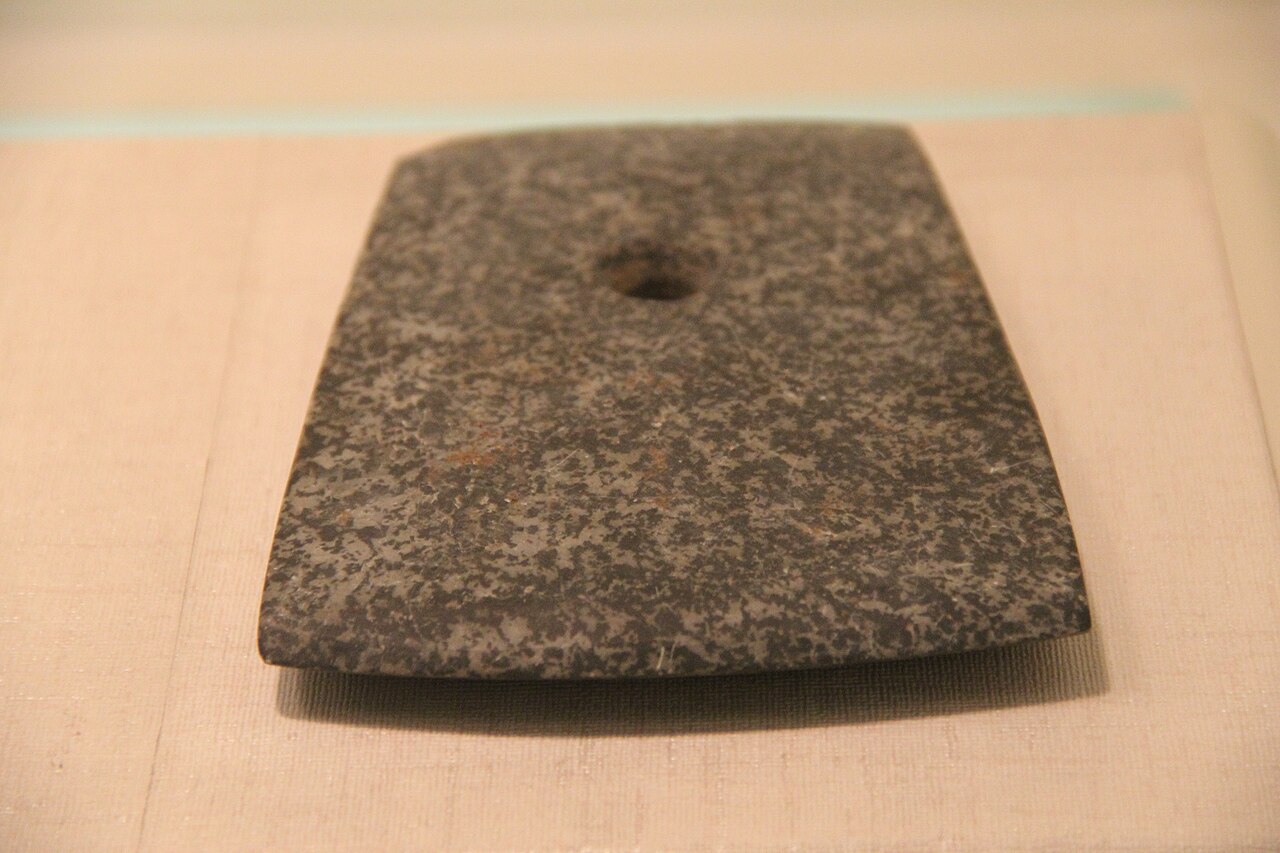
Commerce was practiced to some extent in very early times, as is shown by the distribution of Melian obsidian over all the Aegean area. Cretan vessels appeared to be exported to Melos, Egypt, and the Greek mainland. In particular, Melian vases, eventually, found their way to Crete. After 1600 BC, there was commerce with Egypt, and Aegean goods found their way to all coasts of the Mediterranean. No traces of currency have come to light, excluding certain axeheads. These axeheads were too small for practical use. Standard weights have been found, as well as representations of ingots. The Aegean written documents have not yet been proven (by being found outside the area) to be epistolary correspondence with other countries. Representations of ships are not common, but several have been observed on Aegean gems, gem-sealings, frying pans, and vases. These vases feature ships of low free-board, with masts and oars. Familiarity with the sea is proved by the free use of marine motifs in decoration. The most detailed illustrations are to be found on the 'ship fresco' at Akrotiri on the island of Thera (Santorini) preserved by the ash fall from the volcanic eruption which destroyed the town there. Discoveries, later in the 20th century, of sunken trading vessels such as those at Uluburun and Cape Gelidonya off the south coast of Turkey have brought forth an enormous amount of new information about that culture.
Did You Know?
- The earliest indirect evidence of stone tool use is 3.4-million-year-old fossilised animal bones from Ethiopia.
- The oldest stone tools, dated to 3.3 million years ago, were excavated at Lomekwi 3 in Kenya.
- In some regions, such as Sub-Saharan Africa, the Stone Age was followed directly by the Iron Age.
- The Stone Age is the first period in the three-age system used in archaeology to divide human technological prehistory.
Geographic Scope and Cultural Convergence
The Aegean civilization encompasses three interacting geographic zones: the island of Crete, the Cycladic archipelago, and the Greek mainland. Each region developed its own cultural trajectory while maintaining ongoing contact with the others. Crete is the region most strongly linked to the Minoan tradition, a culture that took shape during the Early Bronze Age. The Cycladic culture initially ran parallel to the mainland's Early Helladic phase—sometimes called the Minyan period—before gradually merging with Cretan traditions during the Middle Minoan era. A dramatic shift occurred around 1450 BC, when the Mycenaean civilization of the mainland expanded its reach to Crete, most likely through military force. The chronological frameworks for each zone differ slightly: mainland periods run from Early Helladic (roughly 3200–2050 BC) through Late Helladic (1550–1050 BC); Cretan phases span Early Minoan (3200–2160 BC) to Late Minoan (1600–1100 BC); and the Cyclades follow their own sequence from Early Cycladic (3300–2000 BC) through the Kastri phase before converging with Middle Minoan culture around 2000 BC.
The Neolithic Migration and the Spread of Farming
The farming communities of Neolithic Greece played a foundational role in transforming the broader European landscape. Before 5000 BC, these early agriculturalists carried their crop-based livelihoods westward across the continent. By approximately 5000 BC, descendant populations had reached the northern European plain in what is now France and Germany, and roughly a millennium later they arrived in Britain. Once established in the Balkans, the Aegean early European farmers appear to have split into two major migratory streams. One branch pushed northward along the Danube River, giving rise to the Linear Pottery culture. The other swept westward along the Mediterranean coast, associated with Cardial Ware pottery, and eventually reached the Iberian Peninsula. It was from this western group that later descendants migrated into Britain, where they displaced the earlier Western Hunter-Gatherer populations, of whom the famous Cheddar Man is a representative. The Chalcolithic, or Copper Age, took hold in Europe around 5500 BC, and during this period megalithic construction began to appear across the continent.
Maritime Trade and Commercial Networks
Commerce in the Aegean world was remarkably extensive even in its earliest phases. The wide distribution of obsidian from the island of Melos across the entire Aegean basin demonstrates that long-distance exchange was well established from the beginning. Cretan pottery was shipped to Melos, Egypt, and the Greek mainland, while Melian vases eventually made their way to Crete, indicating a two-way flow of goods. After 1600 BC, trade with Egypt intensified, and Aegean products reached every coast of the Mediterranean. No true currency has been identified, though certain small axeheads—too tiny for practical cutting—may have served a monetary function, alongside standard weights and depictions of metal ingots. Maritime activity is well attested through ship imagery on gems, sealings, frying pans, and vases, all showing vessels with low freeboard, masts, and oars. The most celebrated depiction is the ship fresco at Akrotiri on Thera, preserved by the volcanic ash that buried the settlement. Twentieth-century discoveries of wrecked trading ships at Uluburun and Cape Gelidonya off southern Turkey have dramatically expanded our understanding of these commercial networks.
Material Culture and Artistic Heritage
The archaeological record of Aegean civilization is extraordinarily rich. Knossos on Crete stands out as the most thoroughly explored site, yielding continuous evidence from the Neolithic period all the way to the twilight of classical civilization. Other major sites include Hissarlik, Mycenae, Phaestus, Hagia Triada, Tiryns, Phylakope, Palaikastro, and Gournia. The built environment encompassed palaces, palatial villas, domestic houses, dome and cist graves, and fortifications, though no clearly defined temples have been identified; small shrines and religious enclosures are known from intaglio carvings and frescoes. Architectural decoration included columns, friezes, mouldings, fresco painting, coloured reliefs, and mosaic inlay. Furniture ranged from massive storage jars to tiny unguent pots, with thrones, seats, and tables fashioned in stone or plastered terracotta. Artistic production spanned stone, ivory, gold, silver, copper, bronze, clay, and faience, though large free-standing sculpture is rare compared to the abundance of smaller carved and cast works. Weapons and tools appear in stone, clay, bronze, and eventually iron. Written records survive as clay tablets and discs, found so far only in Crete.
Gallery




Frequently Asked Questions
What is the Stone Age in the three-age system?
The Stone Age is the earliest of the three periods (Stone, Bronze, Iron) and is defined by the manufacture of stone tools with intentional edges, points, or percussion surfaces. It represents the foundational phase of human technological development before any metalworking appeared.
How long did the Stone Age last?
The Stone Age stretched across roughly 3.4 million years, dwarfing the later Bronze and Iron periods in duration. Its sheer length reflects the gradual, incremental nature of pre-metal technological change.
What are the three subdivisions of the Stone Age?
The period is broken into the Paleolithic, the Mesolithic, and the Neolithic, listed in chronological order. Each phase marks a distinct stage in tool-making techniques and subsistence strategies.
What was the key innovation that defined the Stone Age?
The defining achievement was shaping stone into tools with deliberate edges, points, or flat percussion surfaces. These worked implements set early human technology apart from the unmodified natural stones used by earlier hominins.
What event marked the end of the Stone Age?
The transition out of the Stone Age is signalled by the melting and smelting of copper, which opened the door to the Bronze Age. Once metals could be extracted and cast, purely stone-based toolmaking ceased to be the dominant technology.
More in Ancient Civilizations 1-15
Spotted an error? Know more?
This is a living reference — every entry is fact-audited, and reader corrections feed straight into our audit queue. Suggest an edit · See this site's audit record